
An Analysis Of The Eternal Standard Of Righteousness By Yahuah’s Ways
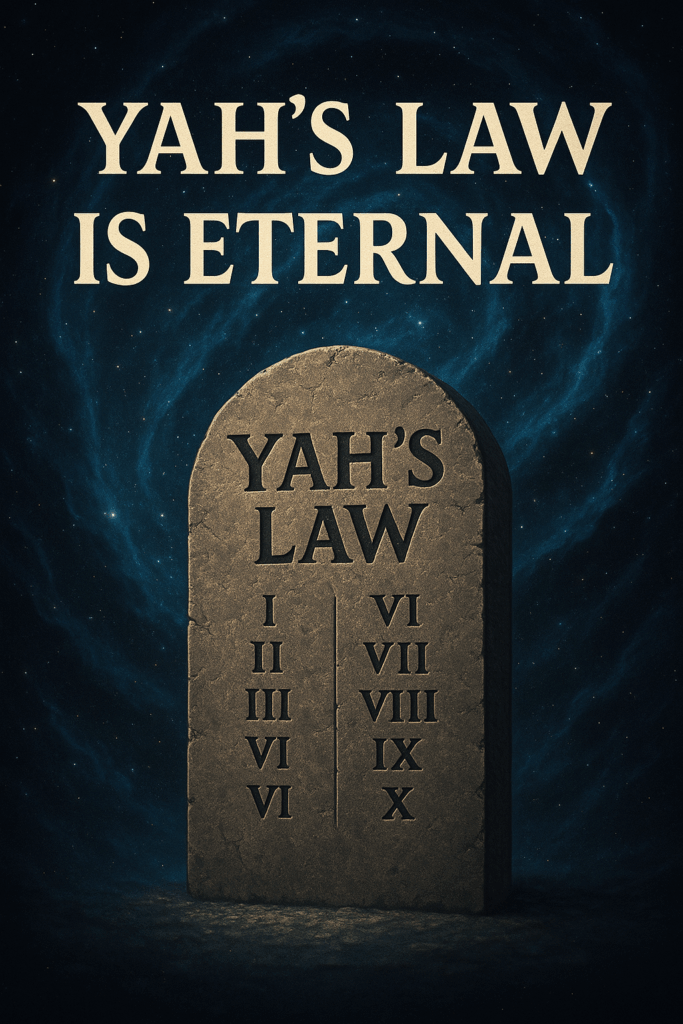
I. Christ’s Affirmation and Fulfillment of the Law
Matthew 5:17–20 (NKJV)
“Do not think that I came to destroy the Law or the Prophets. I did not come to destroy but to fulfill…
- Jesus emphasizes that not one stroke of the Law will pass until all is accomplished.
- Those who break or teach the least commandment to be broken are least in the kingdom; those who obey and teach will be called great.
- Analysis: Fulfilling (Greek pleroo) means completing the Law, like building according to a blueprint—not abolishing it.
Matthew 19:16–19 (NKJV)
“Good Teacher, what good thing shall I do that I may have eternal life?… You know the commandments: ‘Do not murder, do not commit adultery, do not steal, do not bear false witness, honor your father and mother, and you shall love your neighbor as yourself.’”
- Eternal life is tied to continuous observance of the commandments.
- Analysis: Righteousness is found in commandment-keeping, not merely in doctrinal assent.
John 15:9–11 (NKJV)
“If you keep My commandments, you will abide in My love… These things I have spoken to you, that My joy may remain in you, and that your joy may be full.”
- Abiding in Christ’s love depends on keeping His commandments.
- Analysis: Commandment-keeping is the tangible expression of love for Christ and the Father.
II. Apostolic Practice and Instruction
Acts 15:19–21 (NKJV)
“Therefore I judge that we should not trouble those among the Gentiles… but write to them to abstain from things polluted by idols, from sexual immorality, from things strangled, and from blood. For Moses is read in the synagogues every Sabbath.”
- Gentile converts were instructed in foundational commands so they could join synagogue readings of the full Torah.
- Analysis: Entry into covenant is by obedience to key stipulations, not ritual circumcision alone.
Acts 21:20–22, 26 (NKJV)
“…they are all zealous for the Law. What then is it? They have heard you teach not to circumcise… Then Paul purified himself ceremonially…”
- Paul demonstrates continued Torah observance: temple purification, offerings, Sabbath practices.
- Analysis: Even apostles practiced Torah duties to maintain a clear conscience before God.
2 Peter 3:14–17 (NKJV)
“…be diligent to be found by Him in peace, without spot and blameless… untaught and unstable people twist to their own destruction… be on your guard so that you may not be led astray…”
- Peter warns of misinterpretation of Paul to promote lawlessness.
- Analysis: Blamelessness refers to righteousness in commandment-keeping; the Law is the standard.
III. Law as the Measure of Righteousness
James 2:8–26 (NKJV)
“If you really fulfill the royal law… ‘You shall love your neighbor as yourself,’ you do well… Faith without works is dead.”
- True faith manifests in obedience to the Law’s core commands.
- Analysis: Obedience (works) perfects faith; Abraham and Rahab exemplify righteousness by works.
Romans 2:12–13 (NKJV)
“For as many as have sinned without law will perish… for not the hearers of the law are just in God’s sight, but the doers of the law will be justified.”
- Judgement is by the Law; intuitive obedience shows the Law is written in hearts.
- Analysis: Resurrection will produce hearts fully aligned with God’s Law.
Psalm 119:1–3, 142, 160 (NKJV)
“Blessed are the undefiled in the way, who walk in the law of the LORD… Your righteousness is an everlasting righteousness, and Your law is truth… The entirety of Your word is truth, and every one of Your righteous judgments endures forever.”
- The blessed life is characterized by Torah-keeping; God’s Law is eternal truth.
- Analysis: God’s unchanging nature demands unchanging instruction.
IV. The New Covenant and the Law’s Permanence
Jeremiah 31:31–34 (NKJV)
“’I will put My law in their inward parts… they shall all know Me… I will forgive their iniquity, and their sin I will remember no more.’”
- The promised “new covenant” writes the Law on hearts, not abolishing the Law.
- Analysis: Prolepsis—future fulfillment at resurrection, not present abrogation.
Hebrews 8:6–13 (NKJV)
“…a better covenant… ‘I will put My laws into their mind and write them on their hearts…’ In saying ‘new,’ He has made the first obsolete.”
- Jesus mediates a covenant that perfects the Old by internalizing it.
- Analysis: Obsolescence is prospective; the Law persists until written inwardly.
V. Eschatological Reign and Universal Law
Isaiah 2:2–4; Micah 4:1–2 (NKJV)
“…the mountain of the LORD’s house shall be established… out of Zion shall go forth the law… He will judge between the nations…”
- The Millennial Kingdom features global instruction in God’s unaltered Law.
- Analysis: Universal peace flows from obedience to Torah.
Zechariah 14:16–19 (NKJV)
“…all who are left… will go up year by year to worship the King, the LORD of hosts, and to keep the Feast of Booths… if any of the families of the earth do not go up… no rain shall fall.”
- Millennial provision and worship hinge on feasts ordained in the Law.
- Analysis: Creation itself enforces obedience to Sabbath and feasts.
Isaiah 66:19–23 (NKJV)
“’From new moon to new moon, and from Sabbath to Sabbath, all flesh shall come to worship before Me,’ says the LORD.”
- Eternal ordinances: Sabbaths, new moons, feasts.
- Analysis: Ritual calendar endures with the New Jerusalem.
Conclusion
Yahweh’s Law remains the eternal standard of righteousness because:
- Christ Himself affirmed, fulfilled (not abolished), and modeled it perfectly.
- Early apostles practiced, preached, and enforced it among both Jews and Gentiles.
- Righteousness is measured by obedience—faith without works (Torah-keeping) is dead.
- New Covenant internalizes the Law but does not nullify it; true fulfillment awaits resurrection.
- Millennial Kingdom and eternal worship center on unchanging divine statutes.
Thus, from Genesis to Revelation, and into the age to come, Yah’s Law stands unaltered.