A holistic summary of the debate and review video
DEBATE: Did Jesus Practice, Preach the Law of Moses? Vs Matthew Janzen | Video | Transcript | Debate Review Video | Debate Review Video Transcript
Please see my overview video here.
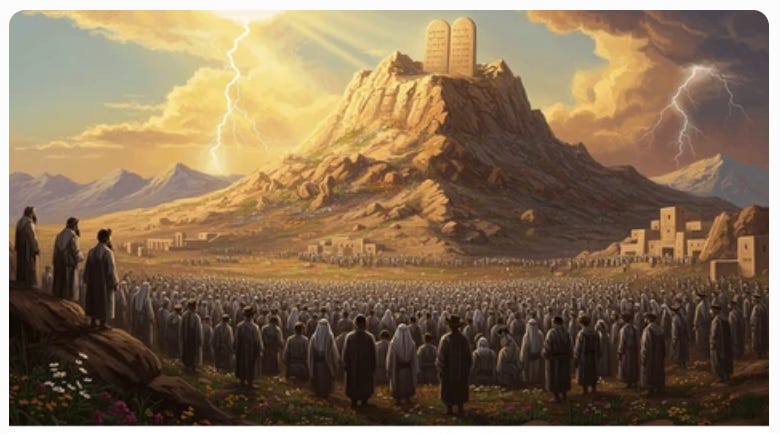
Below is a holistic, structured summary and analysis of both the debate and the debate review, with an eye toward the core theological question you raised:
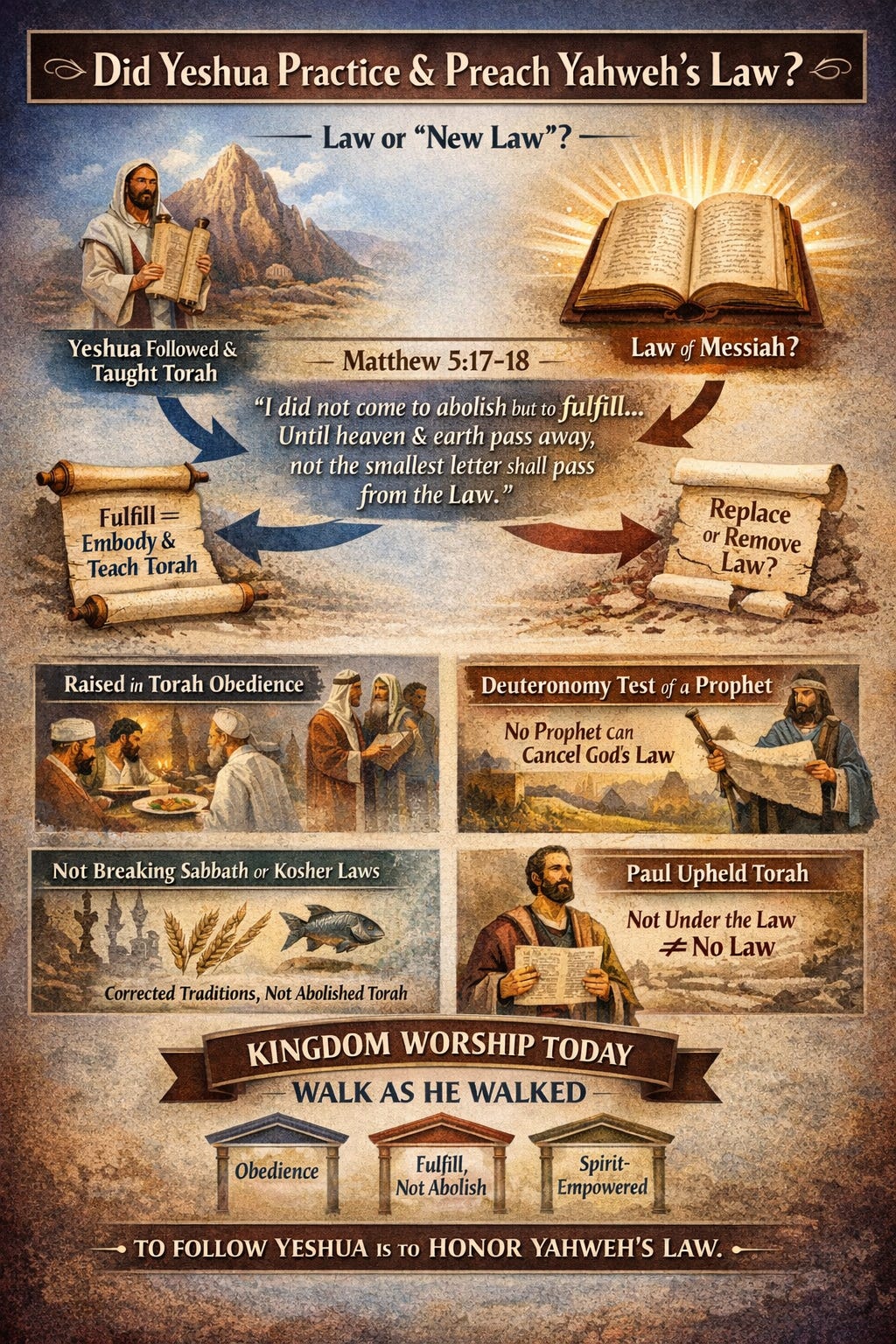
Did Yeshua practice and preach Yahweh’s Law (given through Moses), and does that Law still define faithful worship for Kingdom-seeking believers today?
This synthesis reflects the actual arguments made, not caricatures, and draws out the key themes, fault lines, and implications for modern Christian practice. This debate was hosted by “Metaphysics Mike” and streamed on the “Focus On The Kingdom” YouTube channel.
1. The Central Question Framed Correctly
The debate was not merely about:
- “Did Jesus obey the Law?” (both sides affirm He did),but rather:
- What was the nature, authority, and continuity of the Law Yeshua taught?
Matthew’s side argued:
- Yeshua lived, taught, interpreted, and upheld Yahweh’s Torah (given through Moses), bringing clarity—not replacement.
Carlos’s side argued:
- Yeshua inaugurated a distinct “Law of Messiah,” different in substance from the Mosaic Law.
The debate review exists because the cross-examination exposed internal tensions in the “new law” claim that were not resolved in the live exchange .
2. What the Debate Established Clearly
A. Yeshua’s Entire Life Was Torah-Observant
The affirmative case demonstrated—without dispute—that:
- Yeshua was:
- Circumcised on the 8th day (Lev 12)
- Presented at the Temple with required offerings
- Raised in a Torah-observant household
- A Sabbath-keeper “as was His custom” (Luke 4:16)
- A festival pilgrim (Passover, Tabernacles)
- A wearer of tzitzit (Num 15 / Matt 9)
- A teacher welcomed in synagogues
Crucially:The negative side explicitly affirmed this upbringing and practice.
This created the key problem exposed in cross-examination:
At what point—and by what authority—would obedience to Yahweh’s Law become disobedience?
No clear answer was given without contradiction .
3. The Fault Line: “Fulfill” vs “Replace”
A. Matthew 5:17–19 as the Theological Center
This passage became the linchpin of the debate.
“Do not think that I came to abolish the Law or the Prophets…until heaven and earth pass away, not the smallest letter shall pass from the Law…”
Key observations surfaced repeatedly in both the debate and review:
- “Abolish” and “annul” are parallel concepts
- If Messiah did not abolish the Law,
- Then disciples are warned not to annul it.
- Heaven and earth have not passed away
- Therefore the Law’s covenantal authority remains.
- “Fulfill” (plēroō) is active, not terminal
- It means to fill up, properly express, embody, bring to fullness
- Not “render obsolete”
This point was reinforced repeatedly in the review panel, noting that to read “fulfill” as “cancel” makes Yeshua contradict Himself within three verses .
4. The “New Law” Claim Examined
The negative position asserted:
- Yeshua introduced a new covenant law distinct from Torah
- Paul later called this the “Law of Messiah”
However, the debate review highlighted several unresolved problems:
A. The Deuteronomy Test of a Prophet
If a prophet teaches contrary to Torah, he is false (Deut 13; 18)
If Yeshua:
- Modified, replaced, or contradicted Yahweh’s Law, then He would fail the Torah’s own test of a true prophet
This point was pressed repeatedly in the review and never resolved .
B. Misuse of “Law of Messiah”
The review panel clarified:
- “Law of Messiah” ≠ new legal code
- It refers to:
- Torah as taught, embodied, and authoritatively interpreted by Messiah
- Not Torah replaced by abstraction or moral sentiment
This aligns with:
- Rabbinic language (“Torah of Messiah” = Torah clarified in Messianic age)
- Jeremiah 31 (Law written on hearts—not erased)
The review showed that citing rabbinic sources without their full context produced misleading conclusions .
5. Sabbath, Food Laws, and the “Breaking” Claim
A. Sabbath
The debate demonstrated that:
- Every alleged “Sabbath violation” by Yeshua involved:
- Mercy
- Healing
- Temple precedence
- Human need
All of which are Torah-recognized exceptions, not abrogations.
The review emphasized:
Messiah never violated Torah—He corrected misinterpretations of it .
B. Food Laws (Mark 7)
Both debate and review showed:
- Context = ritual handwashing traditions, not pork
- Yeshua explicitly rebukes setting aside Moses
- “Declared all foods clean” is an interpretive gloss, not explicit Greek meaning
The review reinforced that no Second Temple Jew would hear Yeshua as abolishing Leviticus 11 without immediate uproar—which the Gospels do not record .
6. Paul Reframed, Not Opposed to Torah
A major takeaway from the review:
- Paul is routinely read against Yeshua rather than through Him
- “Not under the Law” ≠ lawlessness
- It means:
- Not under condemnation
- Not under misuse of Torah as ethnic boundary or justification system
The review repeatedly stressed:
Paul practiced Torah, taught Torah, and never preached against it—only against distortion .
7. The Theological Implication for Worship Today
If Yeshua:
- Obeyed Yahweh’s Law
- Taught its permanence
- Warned against annulling it
- Modeled obedience as love for the Father
Then:
Kingdom-seeking believers must ask whether their worship aligns with Messiah’s practice—or later theological systems.
This does not mean:
- Legalism
- Salvation by works
It does mean:
- Obedience as covenant faithfulness
- Torah as revelation of God’s character
- Grace as empowerment to walk as Messiah walked
As emphasized in the review:
The question is not whether Christians “can” obey Torah—but whether we will follow the Teacher we claim as Lord .
8. Core Themes to Drive Home
Key Takeaways
- Yeshua never taught against Yahweh’s Law
- “Fulfill” means embody and teach—not replace
- Torah is Yahweh’s Law, not Moses’s innovation
- New Covenant = internalization, not abolition
- Kingdom worship looks like Messiah’s obedience empowered by the Spirit
- Antinomian readings create contradictions Scripture does not
Final Synthesis
The debate and its review collectively show that:
Yeshua practiced, preached, and upheld Yahweh’s eternal Law—calling His followers to deeper, heart-level obedience, not departure from it.
For Christians seeking the Kingdom, the question is no longer:
- “Is Torah still relevant?”
But:
- “Will we walk as He walked?”
Perfect next step. Below is a clear, teaching-ready visual comparison chart you can drop directly into a slide, Substack post, or podcast video. It is structured to expose the real differences between the two frameworks without straw-manning either side.
TORAH vs. “LAW OF MESSIAH” CLAIMS
Did Yeshua replace Yahweh’s Law—or embody it?
SIDE-BY-SIDE COMPARISON CHART
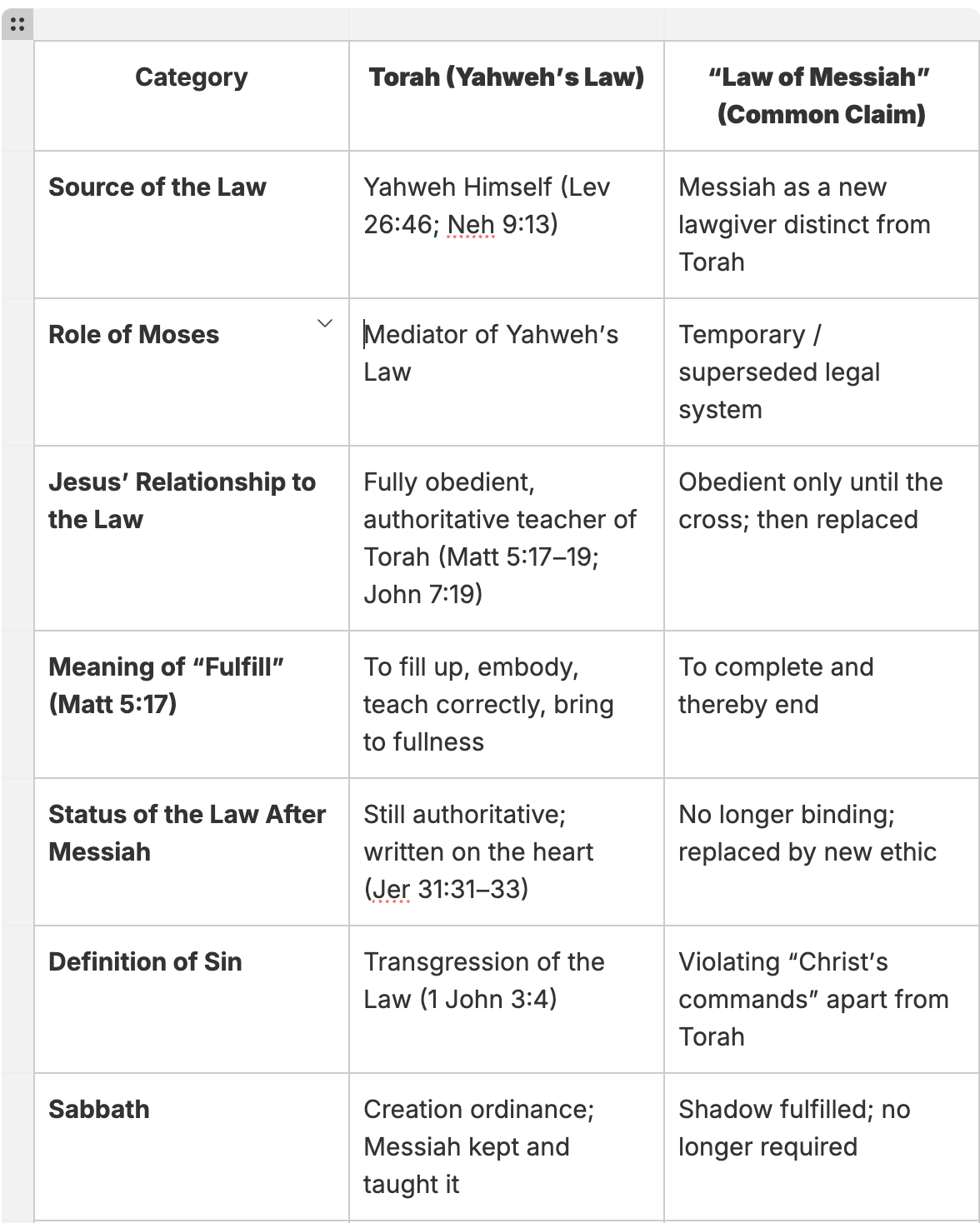
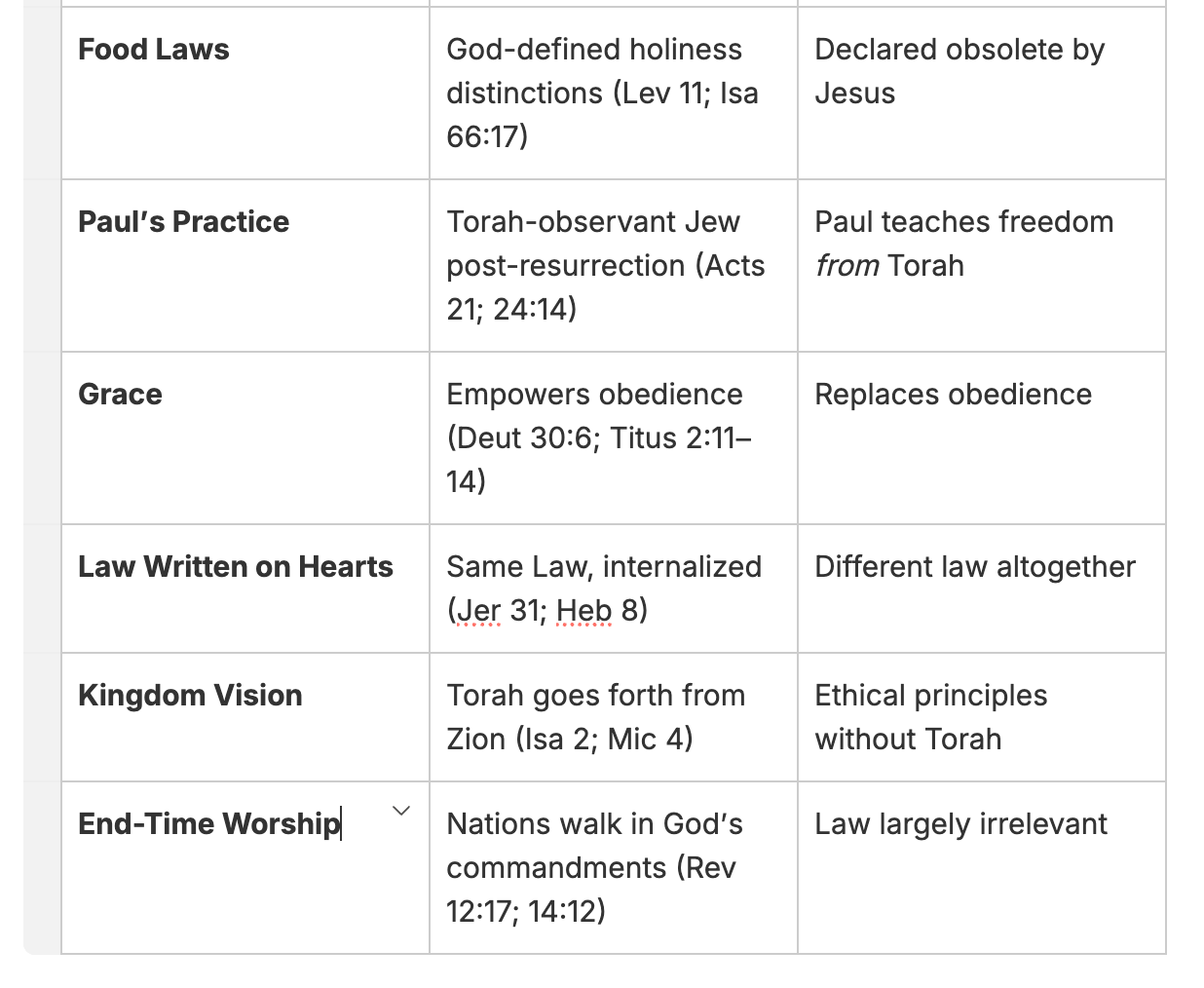
THE CORE LOGICAL TENSION (KEY SLIDE)
If Yeshua replaced the Law:
- He taught against Moses (John 7:19)
- He contradicted Deuteronomy 13
- Matthew 5:17–19 becomes internally incoherent
- “Sin” loses a clear biblical definition
If Yeshua fulfilled the Law:
- He embodied Yahweh’s will perfectly
- He clarified misuse, not substance
- Grace empowers obedience
- Scripture remains unified
WHAT “LAW OF MESSIAH” CAN MEAN (WHEN USED BIBLICALLY)
To be fair and precise, the term “Law of Messiah” can be understood correctly as:
Torah as taught, interpreted, and lived by Messiah—not Torah replaced, but Torah revealed.
This aligns with:
- Matthew 5–7 (right interpretation)
- Jeremiah 31 (same Law, new location)
- Hebrews 8–10 (better mediation, not different commandments)
- 1 Peter 2 (obedience flowing from identity)
KEY SCRIPTURAL ANCHORS (FOR THE SLIDE FOOTER)
- Malachi 3:6 — “I do not change”
- Psalm 119:160 — “Every one of Your righteous judgments endures forever”
- Matthew 5:19 — Warning against annulling commandments
- Romans 3:31 — Faith establishes the Law
- 1 John 2:6 — Walk as He walked
- Revelation 14:12 — Saints keep commandments of God and faith of Jesus
TEACHING TAKEAWAY (ONE-LINE CLOSE)
The Law did not change when Messiah came—the location of obedience changed: from stone to heart.